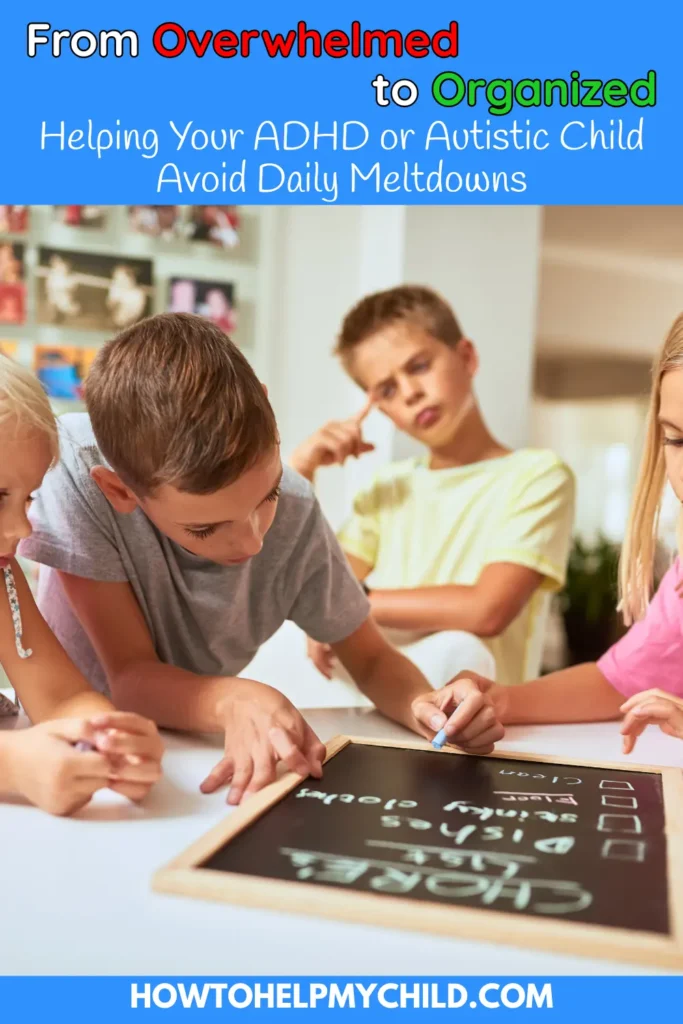
From Overwhelmed to Organized: Helping Your ADHD or Autistic Child Avoid Daily Meltdowns
10 Strategies to Bring More Calm, Structure, and Emotional Safety to Your Home
Is your child with ADHD or autism overwhelmed by daily routines?
You’re not imagining it.
Even simple tasks like getting dressed, doing homework, or packing a bag – can trigger ADHD and autism meltdowns when things feel chaotic or unclear.
Our children with neurodivergent brains often struggle with executive functioning, emotional regulation, and transitions.
When they don’t know what’s coming next or can’t find what they need, their nervous system can go into overload.
The solution?
Small, consistent organization strategies for ADHD and autistic kids can reduce overwhelm and bring calm.
These strategies aren’t just about getting more organized – they’re about helping your child feel safe, supported, and successful throughout the day – which means fewer meltdowns for everyone.
The good news?
You don’t need fancy systems or rigid schedules.
Your child with ADHD or autism just needs the right tools – used gently and consistently, that will bring structure, calm, and confidence into their day.
Let’s reduce overwhelm before it erupts into a meltdown.
Why ADHD and Autistic Kids Struggle With Organization
Understanding Executive Functioning in ADHD and Autism
Executive functioning is your brain’s personal assistant. It helps with:
- Starting and finishing tasks
- Managing time
- Regulating emotions
- Planning and organizing
Many of our kids with autism or ADHD struggle with these skills – especially when routines change, tasks aren’t broken down, or expectations aren’t clear.
How Lack of Structure Triggers Daily Meltdowns
Without a clear plan, your child’s brain can quickly go into overload.
When they don’t know where to start or what’s coming next, it feels unsafe, and that’s when meltdowns often begin.
These aren’t bad behaviors, they’re signs that your child’s nervous system is overwhelmed. Understand what’s really happening during an autism or ADHD meltdown.
💡TIP
A predictable rhythm gives your child’s brain and body a break. Even simple tools like a visual checklist or timer can reduce that internal pressure and stop a meltdown before it starts.
📺 Prefer to watch instead?
Check out this video where I walk through these 10 ADHD & autism-friendly organization strategies to reduce daily meltdowns and boost calm at home.
1. Implement Visual Schedules That Reduce Meltdowns
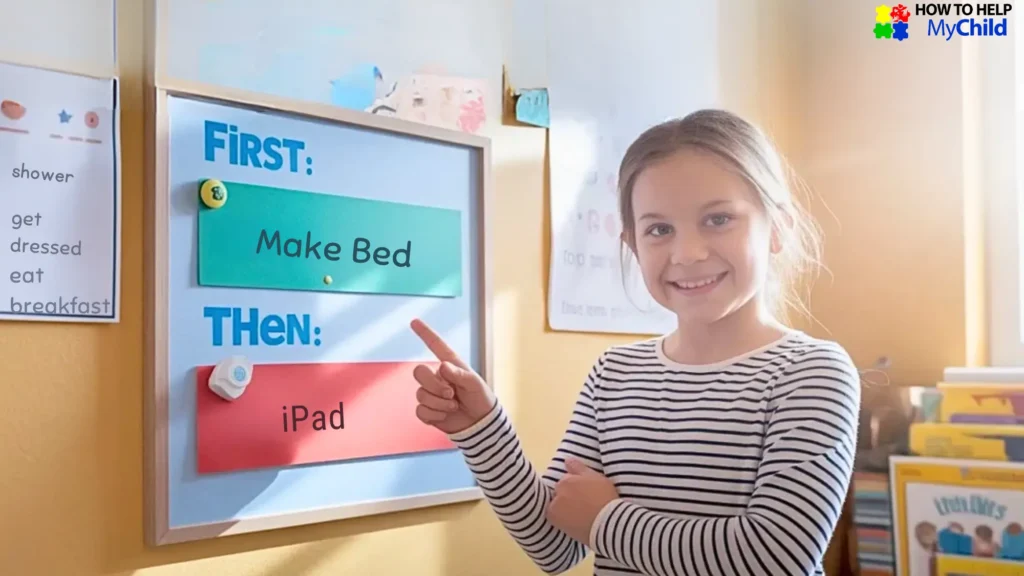
Visual schedules are like a roadmap for the day.
They use pictures, symbols, or simple words to show what’s happening and what’s coming next.
For children with ADHD or autism, this kind of support can be a game changer.
Unlike spoken instructions, which disappear the moment they’re said, visuals remain constant.
Your child can refer back to them again and again, especially during moments of stress or transition.
When their brain feels overwhelmed, having something predictable and visible can create a sense of safety – like a steady hand to hold onto.
Why Visual Schedules help prevent meltdowns:
When kids don’t have to guess what’s next, their brain can relax.
That sense of predictability lowers anxiety, especially during transitions – which are a common meltdown trigger.
How to Create a Simple Daily Visual Routine:
- Use real photos or simple icons
- Include buffer time (snacks, movement breaks)
- Review the schedule each morning
- Keep it visible and within reach
💡TIP
Keep visual schedules in high traffic areas like the fridge or your child’s bedroom wall. That way, they’re easy to access whenever your child needs a gentle reminder of what’s next.
2. Break Tasks Into Steps to Prevent Overwhelm

A task like “clean your room” can feel like too much for a child with ADHD or autism.
Breaking it down turns chaos into something doable.
Why Breaking Tasks Into Steps Helps Prevent Meltdowns:
Big tasks can feel like too much for kids with ADHD or autism.
When everything feels jumbled or undefined, their nervous system goes into panic mode.
Meltdowns often happen when kids with autism or ADHD feel stuck, overwhelmed, or unsure where to begin.
Smaller steps feel possible – and success builds momentum.
Breaking tasks into bite-sized chunks gives them clarity and a sense of control – and that sense of success keeps overwhelm, and meltdowns, at bay.

Is it a Tantrum or Meltdown?
This Guide is for YOU!
Created for moms raising kids with Autism & ADHD, this guide helps you move from confusion & stress to calm & confidence – right when BIG emotions hit. Say goodbye to second guessing & hello to REAL SUPPORT that actually helps.
How to Break Tasks Down Effectively:
- Use clear, short directions like “First shoes, then backpack.”
- Create visual checklists for daily routines.
- Praise effort after each step completed to build confidence.
💛 From a Mom in Our Community:
“Before, asking Jack to clean up his room would end in tears. Now we say, ‘Put the Legos in the red bin. Then put the cars in the tub.’ That clarity helps him stay calm.”
— Kylie, mom to 7-year-old Jack with ADHD
3. Use Timers and Alarms to Ease Transitions

Transitions are tough, especially when they interrupt your child’s favorite activity. Timers help kids mentally prepare and shift more smoothly.
Why Timers Reduce Transition-Based Meltdowns:
Transitions are one of the most common meltdown triggers.
Kids get deeply focused – especially with screens or special interests – and sudden changes feel like a jolt to the system.
Timers give them warning and a sense of control over what’s coming next.
Visual timers reduce the shock of switching tasks.
They give your child time to shift gears instead of being caught off guard.
Transitions are one of the biggest triggers for ADHD and autism meltdowns—learn why and what to do.
How to Use Timers and Alarms to Build Predictability:
- Use a visual countdown timer, so they can see the time passing.
- Give verbal countdowns: “5 more minutes, then lunch.”
- Pair transitions with calming activities: “After clean-up, we’ll have snack.”
💡TIP
Use two-part transitions: one for winding down the current activity, and another to introduce the next. E.g., “In 2 minutes we’ll start packing up. Then we’ll go outside!”
4. Teach Organizational Strategies with Planners and Calendars

Planners and visual calendars help neurodivergent kids anticipate what’s ahead and organize their day with less stress – even if they don’t always show it.
Why Planners and Calendars Help Prevent Emotional Overload:
When your child knows what’s coming it reduces their anxiety of the unexpected, and gives them time to emotionally prepare.
Especially if it’s something challenging or an activity they don’t like.
Calendars and planners help your child to externalize their world, so it doesn’t stay tangled in their head.
Using a planner or calendar, your neurodiverse child is more likely to stay regulated. Surprises = stress.
They can see what is coming next and prepare their body for it.
How to Introduce Planning Tools Without Overwhelm:
- Choose formats that suit your child (paper, apps, whiteboards).
- Color-code for clarity (school, therapy, fun).
- Review it together at the start of the day or week
- Try both digital and paper planners to see what sticks
- Include countdowns to important events (with visuals!)
5. Encourage To-Do Lists and Checklists

A to do list doesn’t just keep kids on task – it builds a sense of success.
Every time they check something off, they feel capable and in control.
Why Checklists Help Reduce Daily Stress:
A checklist doesn’t just organize the day, it gives your neurodiverse child little moments of success.
A list gives a visual “win.”
Each time they tick something off, their brain gets a little boost of dopamine – that feel good chemical linked to achievement and motivation.
It’s like a tiny “You did it!” message from their brain.
For our kids with ADHD and autism, who feel stuck or overwhelmed by what to do next – checklists turn chaos into a step-by-step path.
Think about chores – a checklist makes it easier and more independent for your child to achieve success!
With every tick building pride and emotional safety.
That sense of progress builds confidence, helps them feel in control, and keeps overwhelm and meltdowns, from taking over.
How to Create Checklists Your Child Will Actually Use:
- Use stickers or icons for younger kids.
- Make it visual and simple: one task per line.
- Break big tasks into bite-sized steps
- Display lists where they can see and update them

You’re Not Alone – Find Your Support System Here!
Parenting a child with autism or ADHD can feel isolating—endless meltdowns, sleepless nights, & feeling like no one understands But you don’t have to do this alone.
❣️Get real-life strategies to handle daily challenges.
❣️Connect with moms who get it—no judgment, just support.
❣️Share your wins (and struggles)
❣️Find encouragement, advice, & a place to vent when you need it most.
👉Join our private Facebook group today and step into a community that truly understands!
6. Provide Consistent Structure and Routine

Consistency creates safety.
When your child knows what to expect, they can navigate their day with less fear of the unknown.
Why Consistency Is the Foundation of Regulation:
Our neurodivergent kids thrive on predictability.
Knowing what’s coming next means their body and brain can relax instead of preparing for surprises.
That makes them more open to cooperation – and less likely to meltdown.
Unpredictable changes in routine are one of the top causes of autism meltdowns – here’s what to look out for and how to support your child through them.
💡TIP
Predictable routines lower anxiety and give kids the emotional scaffolding to handle change better.
A calm morning routine can make the whole day smoother – starting with you, mom.
How to Build Daily Structure That Works:
- Set anchors in the day: meals, bedtime, transitions.
- Use the same language during routines (“First teeth, then bed”).
- Build in sensory breaks as part of the schedule.
💛 From a Mom in Our Community:
“When we stuck to the same morning routine, my daughter’s anxiety reduced so much. Transitions got smoother, and the tears stopped happening every day.”
— Jen, mom of Ava, 8, with autism
7. Use Organizational Tools That Work for Them

What works for one child may not work for another – and that’s okay!
The key is to give your child tools they actually like and use.
Why Personalized Tools Build Regulation and Confidence:
If a system feels forced or complicated, kids won’t use it – and then everything unravels.
But when our autistic and ADHD kids have tools they like and understand, they’re more likely to stick with them and feel proud of their success.
How to Choose and Use the Right Tools:
- Let your child try different options: bins, folders, whiteboards.
- Get their input – “Would you rather use post-its or a whiteboard?”
- Allow them to personalize their system (color, layout, stickers).
💡TIP
Let your child decorate their tools or space – ownership builds independence and pride!
8. Create Designated Spaces for Belongings
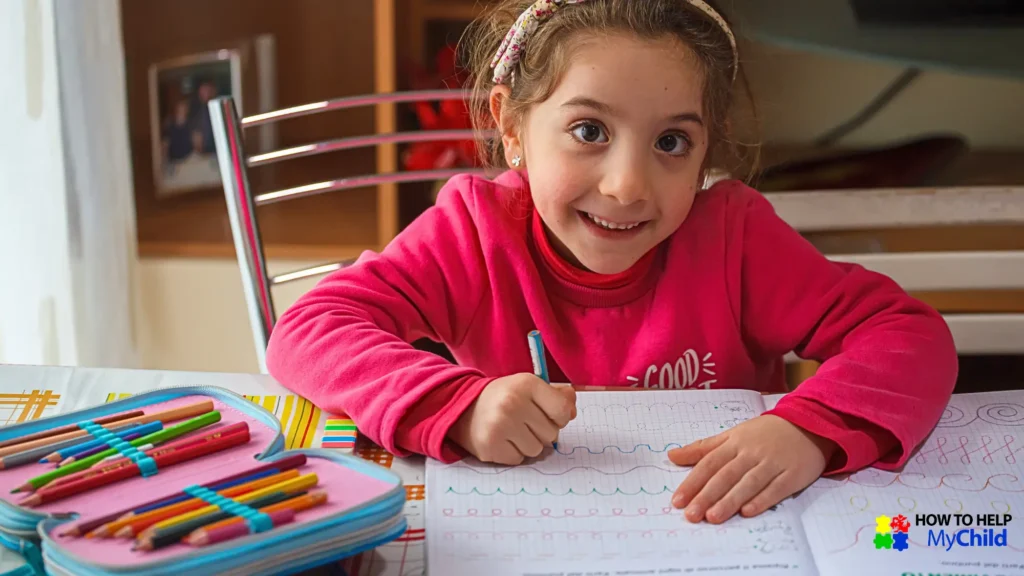
A place for everything = fewer tantrums over lost items and last minute panic.
Why Physical Order Helps Reduce Mental Chaos:
Searching for things (especially under pressure) can be a massive trigger for dysregulation.
Having a clear, predictable home for everything reduces frustration and makes transitions faster and smoother.
Clutter and confusion increase anxiety.
When your child knows where things are, they feel more in control and less overwhelmed.
How to Set Up Calming, Functional Spaces:
- Label bins and shelves with words or images.
- Create a homework zone, calm-down corner, or “daily launch pad.”
- Keep frequently used items in predictable spots (e.g. the same basket each day).
9. Practice Mindfulness and Relaxation Techniques

Calming practices teach your child how to regulate before they escalate — which is key for emotional safety.
Why Mindfulness Helps Prevent Emotional Escalation:
Mindfulness practices build self-awareness, which is a vital skill for emotional regulation.
When kids know how to slow down and notice what’s happening in their body, they’re less likely to spiral into a full meltdown.
Your child learns how to calm their body and brain, then they can interrupt the meltdown cycle before it explodes.
How to Introduce Mindfulness and Calm-Down Tools:
- Practice belly breathing with a stuffed toy on their stomach.
- 5-4-3-2-1 grounding (5 things you see, 4 you hear…)
- Calming playlists or storytime meditation
- Start with 2–5 minutes daily and build from there
10. Encourage Independence and Ownership

This one’s BIG! When your child feels capable, they become calmer, more cooperative, and more confident in themselves.
Why Ownership Builds Confidence (and Lowers Resistance):
When kids feel in control, they’re less reactive and more open to problem solving.
Instead of pushing back, they begin to self initiate.
That’s where emotional regulation truly starts to grow.
Kids who feel in control of their space and routines are less reactive and more regulated.
How to Build Independence Without Pressure:
- Let your child help choose their routine, visuals, or planner.
- Allow them to update their checklist or planner
- Offer choices: “Do you want to check your list before or after snack?”
- Celebrate effort, not just results: “You remembered your steps today – I saw how hard you worked!”
💛 From a Mom in Our Community:
“Letting Toby pick his own color-coded bins made such a difference. He’s proud of his space now and actually wants to keep it organized.” — Megan, mum to Toby, 9, with ADHD
How These Organization Strategies Help Prevent Daily Meltdowns
Helping your ADHD or autistic child get organized isn’t just about neat spaces or color coded folders – it’s about emotional safety.
When your child knows what to expect, can find what they need, and feels confident navigating their day, their nervous system stays calmer.
That means fewer surprises, less overwhelm, and fewer meltdowns.
You’re not just reducing chaos – you’re building connection, confidence, and calm – one simple strategy at a time.
Less Chaos, More Confidence

You don’t have to do all 10 things at once.
Just start with one change:
One checklist
One space
One visual routine
and grow from there.
Progress over perfection is what builds safety and connection.
When your child feels safe and supported, meltdowns start to fade, and calm begins to grow.
Which tool are you excited to try first? Drop it in the comments – I’d love to hear what’s working in your home.
And if you need real-time support and community, come join us inside the
👉 Moms Parenting Neurodivergent Kids Facebook group
You’re not alone.
You’re doing amazing.
And I’ve got you.
Take care,
Sue
🍃💖🍃

Love to pin? Share the love on Pinterest …