How to Manage Meltdowns in Kids with Autism or ADHD (Without Losing Your Cool)
Simple, calm strategies to support your child and stay grounded – no matter how big the moment feels.
When you are trying to manage meltdowns with your neurodiverse child, it can feel like the world is spinning off its axis – fast.
Maybe you’re in the middle of the grocery aisle.
Maybe you’re just trying to get them into the car.
Maybe you said, “Time for dinner,” and now the iPad is a crime scene.
No matter when it happens, meltdowns feel unpredictable, intense, and honestly – exhausting.
But mama, before we go any further, please hear this:
💛 You’re not a bad parent.
💛 Your child isn’t broken.
💛 And meltdowns? They’re not your fault.
Meltdowns are not misbehavior.
Meltdowns are a message – your child’s nervous system saying:
“I can’t cope with this right now.”
Once you understand what’s really going on, you’ll feel more grounded and more confident – even in the hard moments.
Need a visual walkthrough? Watch my video guide:
What You Need to Know to Manage Meltdowns Better

Meltdowns happen when your child’s nervous system gets overloaded – like a cup that’s too full and starts to spill over.
For our neurodivergent kids (autism, ADHD, sensory sensitivities, anxiety), that overflow can come from:
- Too much sensory input (bright lights, loud sounds, itchy tags — you know the drill)
- Emotional overload (frustration, transitions, unexpected changes)
- Communication challenges (when they can’t explain what they need)
- Rigid thinking or disrupted routines
And what they need most in that moment?
Your calm — not your correction.
This isn’t a tantrum – not sure if it’s a tantrum or a meltdown?
It’s not defiance.
It’s not manipulation.
👉 It’s survival mode.

Is it a Tantrum or Meltdown?
This Guide is for YOU!
Created for moms raising kids with Autism & ADHD, this guide helps you move from confusion & stress to calm & confidence – right when BIG emotions hit. Say goodbye to second guessing & hello to REAL SUPPORT that actually helps.
5 Things NOT to Do When You’re Trying to Manage Meltdowns

Let’s be real – managing meltdowns is HARD.
And in the moment, it’s easy to slip into panic, frustration, or even shame.
Here are a few gentle reminders of what to avoid:
🚫 Don’t try to reason or explain
🚫 Don’t raise your voice
🚫 Don’t shame or punish
🚫 Don’t force eye contact or physical touch (unless they want it)
🚫 Don’t expect them to “snap out of it”
💡TIP
Don’t aim to “stop the meltdown.”
Instead, focus on “supporting my child through it.”
That one shift changes everything.
Meltdowns aren’t always about behavior – they’re often about regulation, overwhelm, and emotional overload. This powerful article from CHADD explains how caregivers can shift from reacting to connecting – and why attention is often the first step in calming the chaos.
How to Manage Meltdowns in the Moment

These are the exact strategies I teach inside my community – mom tested and meltdown approved.
Here are my go to, mom tested steps to support your child through a meltdown:
1. Get Low and Go Slow

Sit or kneel nearby, at their level.
No sudden moves.
No rushing to fix it. Just be there.
2. Create a Calm Bubble

Dim the lights.
Lower the noise.
If possible, gently guide them to a quieter space.
Even putting on a hat, closing a curtain, or turning off the radio can help reduce sensory input.
💡TIP
You don’t have to fix the meltdown – just be their calm. When you slow down your breath & soften your tone, you help regulate their overwhelmed system. Your steady presence is often more powerful than anything you could say.

You’re Not Alone – Find Your Support System Here!
Parenting a child with autism or ADHD can feel isolating—endless meltdowns, sleepless nights, & feeling like no one understands But you don’t have to do this alone.
❣️Get real-life strategies to handle daily challenges.
❣️Connect with moms who get it—no judgment, just support.
❣️Share your wins (and struggles)
❣️Find encouragement, advice, & a place to vent when you need it most.
👉Join our private Facebook group today and step into a community that truly understands!
3. Use Visuals Instead of Words

When your child is overloaded, they can’t process language well.
So instead of talking, try:
Using simple hand signals (e.g., “stop,” “breathe,” “hug?”)
Pointing to a calm-down chart
Offering a fidget or comfort item
4. Offer Comfort, Not Control

Let them lead.
Offer their favorite sensory tool, a weighted blanket, or simply your calm presence.
Don’t push. Don’t demand. Just be steady.
5. Model Regulation

Your nervous system is their mirror.
Breathe slowly.
Use a soft tone.
Your calm becomes their anchor.
6. Allow Recovery Time

Even when the meltdown ends, your child’s body still needs time to reset.
No big asks.
No sudden transitions.
Just space, safety, and softness.
💛 From a Mom in Our Community:
“Before, when my son melted down at school pick-up, I’d panic and try to rush him. Now I take 3 deep breaths, sit beside him on the pavement, and hold out his noise-reducing headphones. We don’t speak. After a few minutes, he always looks at me and says, ‘I’m ready.’ “
Sue taught me to this, and that tiny shift has changed everything.
– Tammy, mum of 2
How to Prevent Meltdowns Before They Start
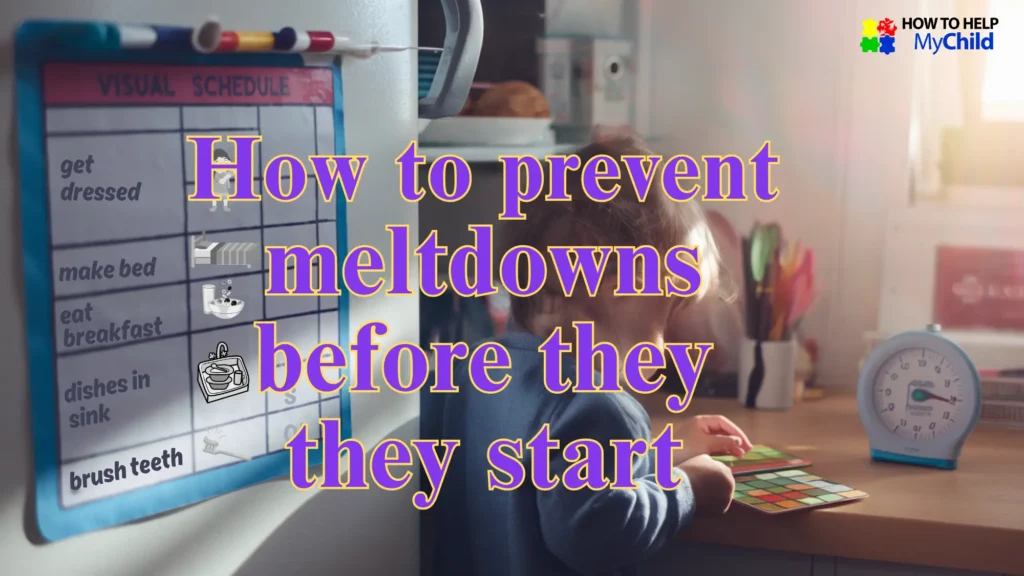
You can’t prevent every meltdown – and that’s okay.
But these small, proactive habits can reduce how often they happen and how big they feel.
✅ Stick to Predictable Routines
Use visual schedules, timers, and routines cards to help your child know what’s coming next. This creates structure and reduces surprises.
Try a visual schedule to make transitions easier and reduce meltdowns.
✅ Give Warnings Before Transitions
A simple “5 more minutes, then we’re packing up” helps your child’s brain and body prepare.
You could even use a transition song (like they do at school) to help your child shift activities without resistance.
💡TIP
Prevention is rooted in connection. When your child feels safe, seen, and supported throughout the day, their nervous system stays calmer – making meltdowns less likely. Simple daily habits like visuals, sensory breaks, and choices can be your superpower.
✅ Build in Sensory Breaks
Don’t wait for overload. Offer calming inputs throughout the day, like:
- 10 minutes on the trampoline
- Deep-pressure squeezes
- A cozy calm-down corner
✅ Offer Small Choices
Give your child some control in their day.
“Do you want to wear your green shirt or your dinosaur one?”
Simple choices reduce power struggles and support independence.
✅ Practice Calm Down Strategies Ahead of Time
Don’t wait until the meltdown starts.
Practice fidget use, breathing techniques, or “calm down” cards during relaxed times.
We call these teachable moments — and they’re golden.
Some kids regulate through movement or repetitive sounds (stims) – and that’s okay. Instead of trying to stop the stimming, you can guide it toward calming techniques that feel natural for your child.
This post from The Mindful Neuro shares simple breathing exercises that build on the way neurodivergent kids already self-soothe. Worth checking out!
💛 From a Mom in Our Community:
“Meltdowns used to ruin our whole day. But now I see them as a cue, a sign my son’s system is maxed out. And thanks to the calm down plan Sue helped us make, he actually asks for breaks now.”
-Jess, mom of a spicy 8-year-old with ADHD
Mama, You’re Doing Better Than You Think

You might feel like you’re walking on eggshells.
You might dread the next public meltdown.
Or feel your chest tighten every time your child begins to escalate.
But here’s what I need you to remember:
💛 Every time you pause and stay calm…
💛 Every time you choose connection over correction…
💛 Every time you try again tomorrow …
You are teaching your child:
- That they are safe
- That their big feelings don’t scare you
- That they are loved — no matter what
And that, mama? Is everything.
FAQs for Parents
What’s the difference between a tantrum and a meltdown?
A tantrum happens when a child is trying to gain something they want, like attention or a specific item. They usually have some control over their behavior and may stop suddenly if their demand is met. A meltdown, on the other hand, is an uncontrolled response to sensory or emotional overload. It’s not a choice – it’s their nervous system saying, “I can’t handle this right now.”
How can I spot a meltdown before it happens?
Watch for early warning signs like covering ears, rocking, humming, or avoiding eye contact. These behaviors often indicate anxiety or sensory overload. If you notice these triggers, step in early by creating a calm environment or offering sensory tools before the situation escalates.
What are the most common triggers for meltdowns in neurodivergent kids?
Triggers often include sensory overload (like loud noises, bright lights, or textures), changes in routine, transitions, or communication struggles. Knowing your child’s specific triggers is key to avoiding meltdowns when possible.
How can I calm my child during a meltdown?
Keep your own voice and movements slow and calm. Dim lights, lower noise, or guide them to a quieter space. Avoid reasoning or arguing—it won’t help in the moment. Instead, offer comfort like a weighted blanket, a favorite sensory tool, or your gentle presence.
Should I talk to my child during a meltdown?
Stick to minimal words. During a meltdown, a child’s ability to process language is reduced. Simple gestures like pointing to a calm-down card or handing them a sensory fidget may work better than speaking. For some children, silence or soft humming might help.
Want More Support Managing Meltdowns?
You’re not alone, and you don’t have to figure this out on your own.
💬 Need support now? Pop into our private Facebook group for real-time encouragement from other moms who get it.
You’ve got this.
And I’ve got you. 💛
Take care,
Sue
🍃💖🍃

Love to pin? Share the love on Pinterest …