
6 Stress Free Bedtime Routine Tips for Kids with ADHD and Autism
Bedtime doesn’t have to feel like a nightly battle.
If you’re raising a child with ADHD or autism, evenings can be especially draining.
Between sensory needs, endless energy, and tricky transitions, it’s no surprise bedtime can spiral into chaos.
But with a few simple strategies, you can create calm and structure that works for your family.
A restful bedtime routine helps your child feel secure and regulated.
It gives them the sleep they need to thrive, while gifting you those precious quiet moments at the end of the day.
If that sounds like a dream, let’s break it down.
Here’s how to build a simple, stress-free bedtime routine that works for kids with ADHD or autism.
Prefer to watch?
Check out the video walkthrough here:
1. Why Consistency Matters in Bedtime Routines for Kids with Autism and ADHD

Consistency isn’t just a nice idea—it’s a lifeline for kids who thrive on structure.
For children with ADHD and autism, knowing what’s next can reduce anxiety and help them feel more in control.
A consistent bedtime routine syncs their internal clock so they fall asleep easier, wake up refreshed, and start the day on a better foot.
Consistency doesn’t mean sticking to a rigid schedule down to the minute.
It’s about creating a predictable flow of activities leading up to bedtime.
Tips to Set a Regular Sleep Schedule

Start by choosing a realistic bedtime range.
For example, aim for lights out between 7:30 and 8:00 PM, depending on your child’s sleep needs.
Stick to that general window every night, even on weekends.
Involve your child in the process.
Let them help decide small details, like the order of steps in the routine.
This makes them feel empowered and less resistant to creating a bedtime routine that works.
Try Visual Schedules for Autism and ADHD
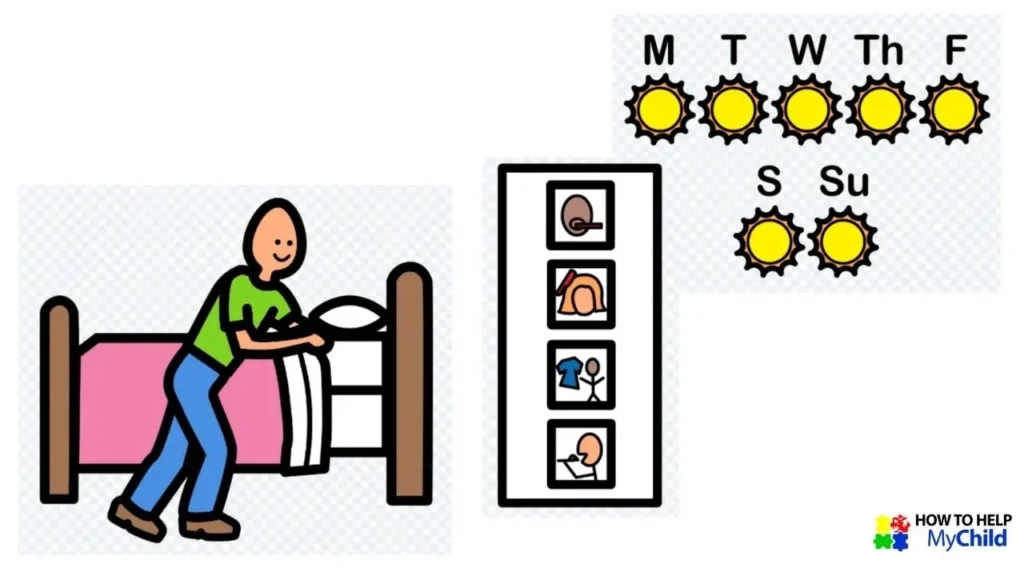
Visual schedules are powerful tools for bedtime routines.
Think of them as step-by-step roadmaps, helping your child know exactly what’s coming.
Create a simple chart with pictures or icons showing tasks like:
- Brushing teeth
- Putting on pajamas
- Reading a book
- Climbing into bed
Keep it accessible – hang it on their bedroom wall or bathroom door.
Cross off completed steps together to encourage participation.
💡TIP
If you’re new to visual schedules for autism, keep it simple at first. Start with just 3-4 steps and adjust as your child gets used to the flow.
2. Build a Soothing Wind-Down Routine

Children with ADHD or autism often struggle to shift from a busy day to a restful night.
That’s where a calming wind-down bedtime routine comes in.
This predictable time signals to their brain and body that sleep is near.
Think of it as the bridge between an active day and a peaceful bedtime.
How Long Is Enough?
You’ll want to start winding down at least 30 – 60 minutes before bedtime.
This gives your child plenty of time to relax without rushing through activities.
Calming Activities to Try
Not all kids unwind the same way, but here are some soothing ideas to include:
- A warm bath with lavender-scented soap (if your child doesn’t have scent sensitivities).
- Reading a favorite book together.
- Listening to soft, instrumental music.
- Gentle cuddles in a dimly lit room.
Avoid roughhousing, active games, or anything too stimulating during this time. Yes Dad that means you!
The goal is a gradual transition to calm.
Observe how your child responds and tweak the activities if needed.
3. Limit Screen Time Before Bed

I know this is a hard topic to talk about.
Let’s face it: screens are part of life, but they’re not bedtime-friendly.
The blue light from devices interferes with melatonin, the hormone that helps us sleep.
For kids with sensory sensitivities, screen-related overstimulation can make it even harder to wind down.
How to Ease Off Screens
Begin turning off screens at least one hour before the bedtime routine starts. Replace screen time with engaging but calming activities like card games, puzzles, drawing, or building blocks.
Expect resistance at first.
If your child fights this change, stay consistent.
Be ready for resistance – but is it a tantrum or a meltdown?

Is it a Tantrum or Meltdown?
This Guide is for YOU!
Created for moms raising kids with Autism & ADHD, this guide helps you move from confusion & stress to calm & confidence – right when BIG emotions hit. Say goodbye to second guessing & hello to REAL SUPPORT that actually helps.
Introduce the new habit gradually and stick to it.
Helping kids with sensory issues often means trial and error, so give yourself grace while figuring out what works.
4. Create a Comfortable Sleep Environment

Imagine trying to sleep in a space that doesn’t feel right for you – too noisy, too bright, or too cluttered.
For kids with autism or ADHD, sensory needs play a huge role in their ability to feel comfortable at night.
Tailor the Room to Their Needs
Every child has unique sensory preferences. Some examples might include:
- Lighting: A dim nightlight, blackout curtains, or a completely dark room.
- Temperature: Cool and crisp or warm and cozy.
- Noise levels: Silence, white noise, or soft background sounds.
Work with your child to create their ideal sleep environment.
Add sensory-friendly touches like weighted blankets, soft-textured bedding, or favorite comfort items like stuffed animals.
Declutter the Space
A visually overwhelming bedroom can actually keep a child’s mind racing.
Keep distractions to a minimum by storing toys and rotating them out of sight. The goal is to create a space that feels peaceful and safe.
5. Use Positive Reinforcement

Celebrating small successes can completely change the bedtime dynamic. Positive reinforcement rewards your child for their effort, making them more likely to follow the routine willingly.
Get Creative with Rewards
Try sticker charts where your child earns a sticker for every step completed.
After a week, they might “cash in” for a small reward, like a special outing or an extra bedtime story.
Remember though – it is the process you are rewarding, not the outcome!
Use Encouraging Phrases
Reinforce good behavior in the moment:
- “I love how you put on your pajamas so quickly!”
- “Thank you for brushing your teeth without needing reminders.”
When praised consistently, your child starts feeling proud of their efforts, and bedtime becomes less of a struggle.
6. Prepare for the Next Day

End every evening by setting the next morning up for success.
ADHD daily routine hacks often start with preparation the night before.
This helps reduce decision fatigue and prevents chaos during busy mornings.
Try adding the following tasks into your evening schedule:
- Lay Out Clothes: Choose and set out your child’s outfit for the next day to simplify the morning decision-making process.
- Pack Backpacks: Ensure all necessary school items, such as homework, books, and supplies, are packed and ready to go.
- Prepare Lunches and Snacks: Assemble lunches and snacks in advance to save time and reduce morning stress.
- Set Up Breakfast Items: Arrange non-perishable breakfast items on the table or counter, making the morning meal more straightforward.
- Review the Next Day’s Schedule: Discuss any upcoming activities or appointments with your child to help them anticipate and mentally prepare for the day ahead.
Make It a Team Effort
Let your child help choose their outfit, pack their backpack, or set out their breakfast dishes.
Use a simple checklist to keep these tasks clear and easy to follow.
💡TIP
Involving your child with these preparations also helps increase responsibility and independence while creating a smoother transition into the next day.
Ready to Bring Calm and Structure to Your Home?

Making bedtime routines easier isn’t just about better sleep.
It’s about creating a home environment that supports your child’s unique needs. From visual schedule tips for ADHD and autism to sensory-friendly sleep spaces, each small step adds up to big changes.
Whether you’re navigating sensory sensitivities, picky eating solutions, or frustrating transitions, routines can create stability in a world that often feels unpredictable.
With patience, trial and error, and these practical tips, you’ll give your child the calm and structure they need to thrive.

You’re Not Alone – Find Your Support System Here!
Parenting a child with autism or ADHD can feel isolating—endless meltdowns, sleepless nights, & feeling like no one understands But you don’t have to do this alone.
❣️Get real-life strategies to handle daily challenges.
❣️Connect with moms who get it—no judgment, just support.
❣️Share your wins (and struggles)
❣️Find encouragement, advice, & a place to vent when you need it most.
👉Join our private Facebook group today and step into a community that truly understands!
What’s your favorite bedtime tip?
Share it in the comments – it might just inspire another family!
Remember Mom, you can do this.
Progress doesn’t happen overnight, but each step counts.
Sleep well!
You can do this!
Take care,
Sue
🍃💖🍃