
7 Calming Strategies That Prevent Meltdowns (And Bring More Peace Into Your Day)
Meltdowns can feel like emotional hurricanes – unpredictable, intense, and draining for everyone in the path.
You worry about your neurodivergent child’s wellbeing.
You try to stay calm while your brain is spiraling.
You walk on eggshells, never quite sure when the next wave will hit.
And let’s be honest – moms often carry the weight of it all.
But here’s some good news:
💛 You’re not helpless.
💛 Meltdowns aren’t inevitable.
💛 There are ways to step in before things boil over.
With a few simple tools and shifts in routine, you can start to create more calm, and even help your child learn to regulate before the overwhelm takes over.
Let’s explore seven ways that help prevent meltdowns before they escalate.
Prefer to watch instead? Catch the video walkthrough here:
Why Do Meltdowns Happen?
Let’s get one thing clear:
Meltdowns are not misbehavior.
They’re not a sign your child is “being difficult” or “trying to get attention.”

Meltdowns happen when your child’s nervous system becomes overwhelmed. Their body and brain go into survival mode and they simply can’t cope with what’s happening around them.

Is it a Tantrum or Meltdown?
This Guide is for YOU!
Created for moms raising kids with Autism & ADHD, this guide helps you move from confusion & stress to calm & confidence – right when BIG emotions hit. Say goodbye to second guessing & hello to REAL SUPPORT that actually helps.
Common Triggers:
- Sensory overload
- Emotional frustration
- Transitions or changes in routine
- Hunger or fatigue
- Communication challenges
💡TIP
When you understand that a meltdown is your child asking for help- not acting out – it shifts everything.
1. Start with Deep Breathing to Prevent Meltdowns

When emotions start bubbling up, breathing is your child’s superpower.
It helps slow the heart, calm the brain, and give them space to reset.
Breathing helps your child regulate before the emotions build to the point of a meltdown.
It’s one of the easiest ways to prevent meltdowns before they start.
Why it helps
Deep breathing slows the nervous system, sends more oxygen to the brain, and gently lowers stress levels.
For neurodivergent kids, it can be a powerful way to shift from “fight or flight” into a more settled, regulated state.
But here’s the thing – like any skill, it only works if it’s been practiced ahead of time.
Come and join our free facebook group for support and tips with helping your child.
How to make it work
Start weaving breathing games into everyday moments before the big feelings hit.
You might try snake breathing while waiting at the school gate, bunny breathing during pretend play, or triangle breathing as part of the bedtime routine.
The more your child practices when they’re already calm, the easier it’ll be for their brain and body to reach for it when things start to feel too big.
Kid-Friendly Techniques to Help Prevent Meltdowns:
- 🐍 Snake Breathing: Inhale slowly, exhale with a gentle “hiss.”
- 🐰 Bunny Breathing: 3 quick sniffs in, 1 long exhale.
- 🔺 Triangle Breathing: Breathe in, hold, and out while tracing a triangle.
💡TIP
Practice deep breathing before the meltdown. Make it part of your morning or bedtime routine so it feels familiar and comforting when your child really needs it.
2. Use Sensory Tools to Support Regulation and Prevent Meltdowns
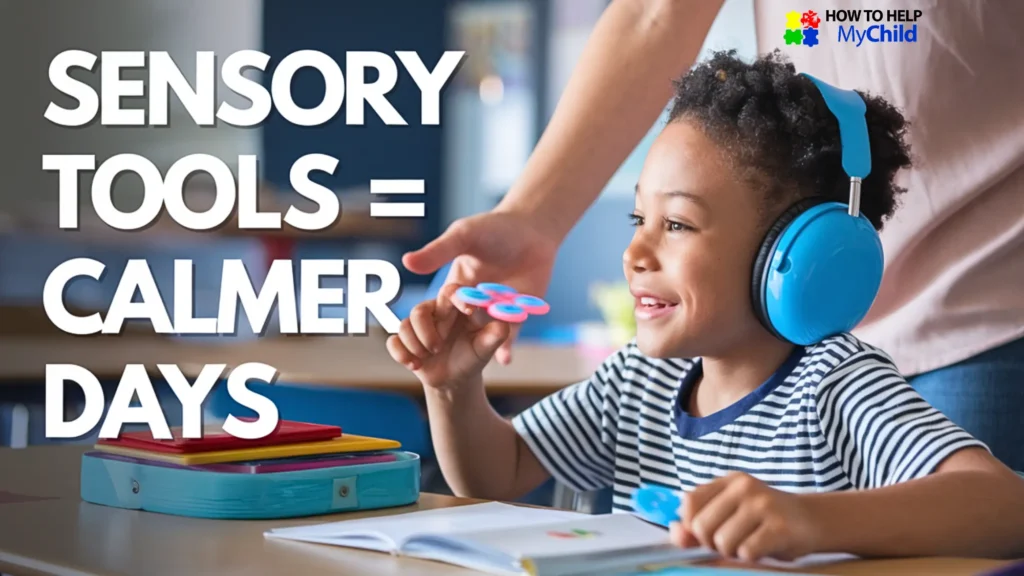
Sensory tools help your child regulate their nervous system.
They’re not just fidgets — they’re lifelines.
Set clear expectations from the start: sensory tools are supports, not toys.
For kids with ADHD and autism, having a dedicated space and the habit of reaching for these tools when they’re feeling off-balance (not just bored or fidgety), can make a big difference.
Why it helps
Sensory regulation is foundational for neurodivergent kids.
Many autistic and ADHD children have sensory systems that are either hypersensitive (over responsive) or hyposensitive (under responsive).
That imbalance can quickly lead to dysregulation, anxiety, or even shutdowns.
Sensory tools help restore that balance, giving their nervous system exactly what it needs to settle.

You’re Not Alone – Find Your Support System Here!
Parenting a child with autism or ADHD can feel isolating—endless meltdowns, sleepless nights, & feeling like no one understands But you don’t have to do this alone.
❣️Get real-life strategies to handle daily challenges.
❣️Connect with moms who get it—no judgment, just support.
❣️Share your wins (and struggles)
❣️Find encouragement, advice, & a place to vent when you need it most.
👉Join our private Facebook group today and step into a community that truly understands!
How to make it work
Start by observing your child closely.
Do they constantly seek movement? Avoid noise? Chew on sleeves? Crave deep pressure?
Use those insights to build a personalized sensory toolkit.
Try things like chewable necklaces, vibration pillows, or a weighted lap pad for seated tasks.
Keep these items within reach – in the car, school bag, or calm-down corner – so your child knows exactly where to find them when they need support.
Try These Tools:
- Stress balls or squishy toys
- Weighted blankets or lap pads
- Chewelry or tactile textures
- Noise-canceling headphones
- Silky fabrics or calming scents
💛 From a Mom in Our Community:
“My daughter used to spiral at the grocery store. Now, she keeps a sensory fidget in her pocket, and it’s become her quiet way of managing stress. She calls it her ‘magic squishy’ and it really is.”
— Rachel, mom of a 6-year-old with SPD
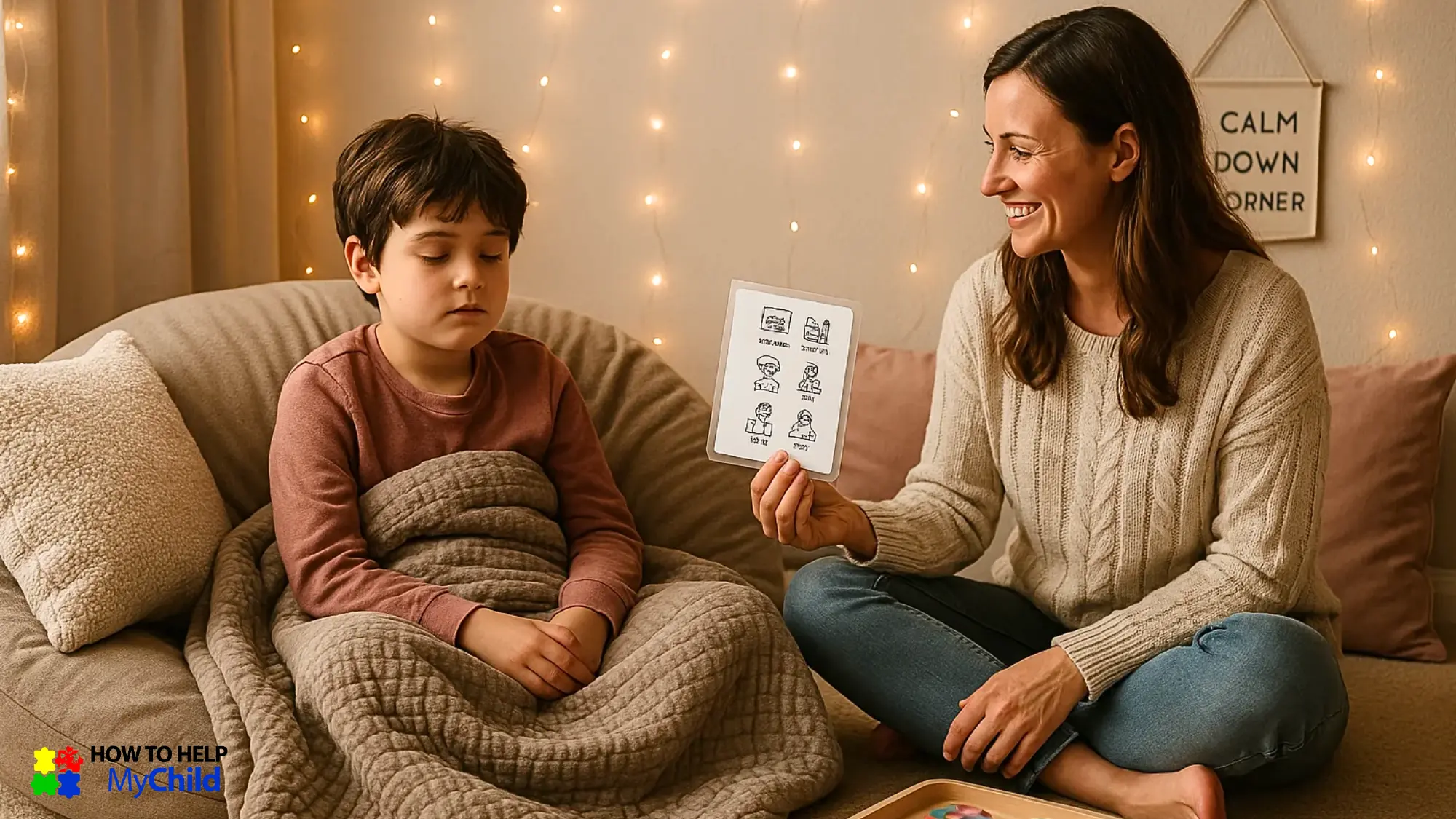
3. Create a Calm Down Corner

Every child deserves a safe space to reset.
Not a punishment. Not a timeout.
Just a calm, quiet corner where they can pause, breathe, and feel okay again.
This space doesn’t need to be fancy.
A cozy nook with a few sensory friendly comforts can make a world of difference, especially for neurodivergent kids who are constantly navigating a world that doesn’t always match their needs.
Think of it as a sensory-safe zone — not a consequence, but a comfort.
Having a sensory-safe space available makes it more likely your child can regulate independently – and prevent meltdowns before they escalate.
Stick with a few familiar comforts
Try not to switch them up too often.
For neurodivergent kids, predictability is everything.
Their calm down space should feel like a soft, steady exhale – the same textures, the same tools, the same cozy signals that tell their brain: “You’re safe here.”
Maybe it’s a weighted lap pad.
Maybe it’s that one soft blanket they’ve loved for years.
Maybe it’s a favorite fidget they can always count on.
Fewer choices. Fewer surprises. Just a consistent, reliable space they don’t have to figure out when their body and brain already feel overwhelmed.
Why it helps
When your child starts to feel dysregulated, they need somewhere that doesn’t ask more of them.
A calm down corner sends a powerful message:
“It’s okay to pause. You’re not in trouble. You’re safe.”
And that message – especially when it’s repeated over time – builds trust, emotional safety, and self-regulation.
How to make it work
Keep the space consistent and simple.
- Use soft lighting or a dim corner of the room
- Include familiar textures and calming tools
- Avoid overstimulation (no screens, flashing lights, or loud toys)
Let your child help design the space – when they feel ownership, they’re more likely to use it.
And most importantly, offer it proactively.
Don’t wait until the meltdown is already in motion.
If you notice early signs of stress, gently suggest a break in their calm corner.
Over time, it becomes a habit – one that helps them pause, regulate, and return feeling more in control.
What to Include:
- Soft seating or pillows – A bean bag, floor cushion, or pile of cozy pillows invites them to relax and get comfy.
- A weighted blanket or lap pad – The deep pressure helps ground their body and soothe the nervous system.
- Fidgets and visual supports – Keep a few trusted tools nearby, like a favorite fidget or an emotion chart they can point to.
- Calm lighting – Think warm lamps or fairy lights instead of harsh overhead lights. Bonus: they make the space feel magical.
- Soothing sounds – A white noise machine, calming playlist, or gentle nature sounds can help block out background noise and create a peaceful vibe.
💡TIP
This isn’t a timeout spot. It’s a sensory friendly safe zone. Stick with a few comforting items and don’t rotate them too often – predictability makes it feel safe.
4. Stick to Predictable Routines

Predictability isn’t just about keeping the day running smoothly – it’s about creating emotional safety.
When your child knows what’s coming next, their brain can relax.
The guesswork disappears and with it, a lot of the anxiety that often leads to meltdowns.
Why it helps
For our neurodivergent kids, routines offer a sense of structure and control in a world that can often feel overwhelming.
Their nervous system settles when the day feels familiar – not full of surprises.
The more predictable the flow, the easier it is for their brain and body to stay regulated.
💡TIP
Preview the day each morning. “Here’s what we’re doing today…” This helps ease anxiety and your child can prepare their body for the activities in the day.
How to make it work
Start with simple visual supports:
- Use icons, drawings, or photos to build a visual schedule
- Create a morning checklist or a bedtime flow with step-by-step pictures
- Narrate transitions as they happen: “After snack, we’ll clean up — then it’s LEGO time.”
Consistency doesn’t mean rigidity.
It means offering gentle anchors throughout the day, so your child knows what to expect, and what’s expected of them.
Routine Support Tools:
- Visual schedules with icons or photos
- First-Then boards
- Countdown timers or apps
- Transition songs or verbal prompts
👉 Want to go deeper? This post on using visual schedules shows exactly how to build routines that reduce anxiety and prevent meltdowns.
💛 From a Mom in Our Community:
“Using a visual chart for our morning routine changed everything. Toby used to resist every step. Now, he points to what’s next and feels proud when we tick it off together.”
— Jess, mom of Toby, an 8-year-old with ADHD
5. Teach Emotional Regulation Skills
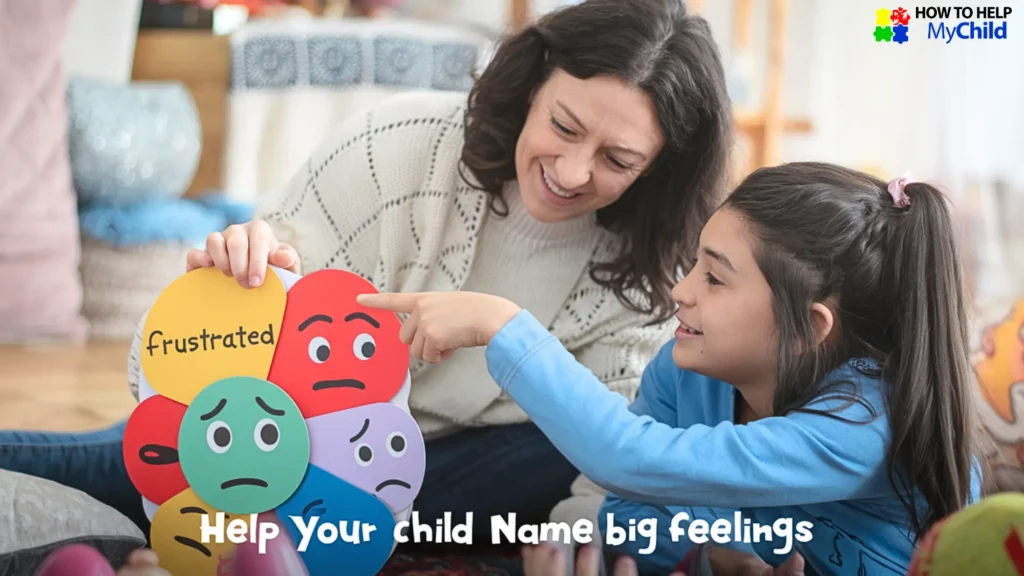
Big feelings don’t come with instructions.
Kids need help learning how to notice, name, and navigate their emotions – especially when they’re overwhelmed.
Many of our neurodivergent kids struggle to recognize or express what they’re feeling.
Why it helps
Many of our neurodivergent kids struggle to recognize or express what they’re feeling.
That frustration, sadness, or sensory overload doesn’t just disappear.
It builds until it spills out as a meltdown.
Teaching emotional literacy gives your child the words and tools to ask for help before they hit their limit.
💡TIP
Look for teachable moments. You don’t have to explain during the meltdown. Instead, talk about emotions when you’re cuddled up reading or playing pretend.
How to make it work
Start with gentle, everyday practice:
- Use an emotion chart with faces and simple words
- Read storybooks about feelings and talk about the characters
- Model your own regulation out loud:
“I’m feeling frustrated, so I’m going to take a deep breath and stretch for a minute.”
The more you name and normalize emotions, the more your child learns that big feelings aren’t scary – they’re just signals. And they can be managed.
Try This:
- Emotion charts (with faces + feeling words)
- “I feel…” cards your child can hand you when they’re not ready to speak
- Pause movies or shows and ask, “What do you think that character is feeling?”
These small moments of practice add up – and over time, your child starts to build their own emotional toolbox.
You can also explore how mindfulness supports emotional regulation in neurodivergent kids in this helpful article by EFBomb Coach.
💛 From a Mom in Our Community:
“My daughter Emma used to throw things when she felt angry. Now she brings me her emotion card and says, ‘I’m red mad.’ It’s a huge step.”
– Tina, mom of Emma, a 6-year-old with ADHD
6. Make Movement Part of the Day

Kids aren’t meant to sit still all day and for children with autism and ADHD, movement isn’t just helpful… it’s essential!
It helps release tension, regulate emotions, and keep their nervous system feeling steady.Movement helps release tension and regulate your child’s body.
Why it helps
Physical activity is one of the most powerful tools for regulation.
It helps burn off excess energy, calms the nervous system, improves focus, and offers a healthy outlet for big emotions.
For kids with ADHD, movement often isn’t optional — it’s how their brain resets and recharges.
💡TIP
Try a movement break before transitions – it sets the stage for calm.
How to make it work
Build movement into the rhythm of your day. Not just as a “last resort,” but as a regular, preventive support.
Here are a few easy ways to do that:
- Morning trampoline time to start the day grounded
- Walk to school carrying their own backpack
- Dance parties between homeschool subjects or chores
- Nature walks or scooter rides after school
- Movement breaks before challenging transitions or focus-heavy tasks
Even 5–10 minutes of intentional movement can make a big difference in how your child feels, and how your day flows.
Quick Reset Ideas:
- Jumping on a trampoline
- Yoga stretches (child’s pose, butterfly)
- Walks or scooter rides
- Dance parties or obstacle courses
- Swinging or rolling
💛 From a Mom in Our Community:
“William used to melt down every time we started homework. Now we do 10 minutes of jumping jacks and stretching first – and he can actually focus. It was so simple!”
— Eliza, mom of William a 10-year-old with ADHD and sensory needs
7. Use Visual and Auditory Cues for Transitions

For our spicy kids, transitions can feel like free-falling without a parachute.
One minute they’re deep in a favorite activity – the next, they’re being asked to stop, switch, and move on.
It’s no wonder those in-between moments often spark meltdowns.
Why it helps
Transitions are one of the most common meltdown triggers.
Visual and auditory cues give your child’s brain time to prepare for what’s coming next.
This reduces the anxiety your child feels when faced with sudden change.
When transitions feel more predictable, they become less threatening.
💡TIP
Previewing what’s next reduces resistance. Try: “We have 5 more minutes of play, then it’s time to clean up. Would you like a 2-minute warning too?”
How to make it work
Use simple, consistent cues to guide your autistic and ADHD child through changes.
These might include:
- A picture schedule showing what’s next
- A countdown timer before a transition
- A “first-then” board to show sequence
- A transition song that signals clean-up or bedtime
For example:
A “pack-up” song before dinner, a five-minute warning before turning off the iPad, or a count down timer during playtime can all help your child shift gears with more ease – and fewer tears.
Tools That Help:
- Visual schedules (with pictures or icons)
- Timers with visual zones or color-coded countdowns
- “First-Then” visuals to show next steps
- Transition songs or sound cues that signal a change is coming
- The goal isn’t to eliminate every hard moment — it’s to help your child feel a little more prepared, a little more supported, and a little more in control.
A Path to More Peaceful Days

You won’t prevent every meltdown – and Mom, you’re not supposed to.
👉 Struggling with what to do during a meltdown? Here’s my full guide to managing meltdowns in the moment with scripts, tips, and examples from real moms in our community.
But by using these calming strategies with consistency and care, you’re building something powerful:
💖 A home where your child feels safe.
💖 A rhythm that helps them trust what’s coming next.
💖 And a connection that can hold even the hardest moments.
You’re not just managing meltdowns.
You’re creating calm.
You’re teaching emotional resilience.
And you’re reminding your child – over and over – you don’t have to go through this alone.
These calming strategies don’t just manage behavior, they teach emotional regulation and help your child feel safe, seen, and supported.
That’s how we prevent meltdowns – from the inside out.
Now I’d love to hear from you:
Which calming strategy are you most excited to try this week?
Let’s keep building calmer, more connected homes – one breath, one moment, one small win at a time.
Take care,
Sue
🍃💖🍃

Love to pin? Share the love on Pinterest …





One Comment